Pineapple Colored Icons: What Nobody Tells You Before You Download
You have seen them everywhere. Bright, cheerful, and undeniably versatile, Pineapple Colored Icons have become a go-to visual asset for designers, marketers, and content creators who want to inject warmth and clarity into their projects. But here is the honest truth: most people who download icon sets like this one make avoidable mistakes that turn a great purchase into a frustrating experience. Whether you are building a mobile app, designing a social media campaign, or laying out a print flyer, the way you handle these icons can make the difference between a polished final product and one that looks rushed. Let us walk through the most common missteps and, more importantly, how to avoid them.
Confusing Beautiful Design with Universal Usability
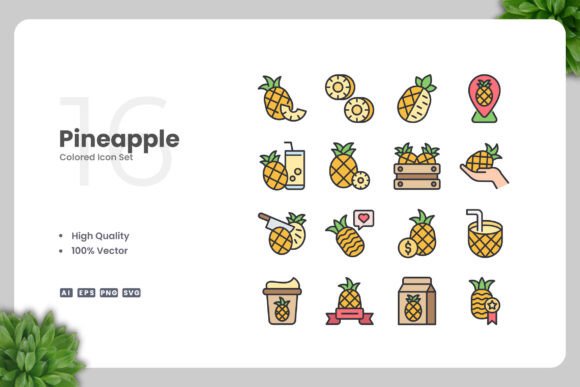
The first thing you notice about Pineapple Colored Icons is how clean and simple they look. That is by design. But a common mistake is assuming that a visually appealing icon set will work perfectly in every context without adjustment. Beginners in particular often drop icons straight into a layout, resize them roughly, and wonder why the proportions look off or the colors clash with their background.
Icons are not one-size-fits-all. Even a well-made vector set needs thoughtful placement. If you are using these icons for a mobile app interface, the size and spacing around each icon matter enormously. On a poster or banner, the same icon may need to be scaled up significantly, and that can expose small alignment issues that were invisible at smaller sizes. The solution is simple: always test your icons in context before finalizing. Place them in a mockup, check how they sit next to text and other elements, and adjust scale and positioning as needed.
Overlooking the Power of Vector Files
This icon set comes with source files in Ai, EPS, SVG, and PNG formats. That is a gift, yet many people ignore everything except the PNG. Relying solely on raster files limits what you can do. PNGs are fine for quick use, but once you need to change a color, resize without quality loss, or adapt the icon for a different medium, you will hit a wall.
If you are not comfortable with vector software like Adobe Illustrator or CorelDRAW, the idea of opening an .ai or .eps file can feel intimidating. But here is the thing: learning just two or three basic actions can unlock the full value of this set. Open the SVG file in your browser or vector editor, and you can adjust the color to match your brand palette, scale it to any size without pixelation, and even combine icons to create custom compositions. Do not let the file formats intimidate you. The readme.txt file included with the download usually contains basic instructions. Spend ten minutes exploring the vector files, and you will save hours of frustration later.
Changing Colors Without Understanding the Original Palette
Pineapple Colored Icons come with a specific color scheme that gives them their distinctive look. The yellows, greens, and warm accents are carefully balanced. A frequent mistake is to recolor these icons arbitrarily, choosing colors that clash with the icon style or with other design elements. I have seen cases where someone turned a pineapple icon entirely into a flat gray, losing all the personality that made the set appealing in the first place.
Better approach: start by understanding why the original colors work. The pineapple theme naturally suggests warmth, freshness, and energy. If you need to match a brand palette, select colors that retain that feeling. Use the vector file to apply your brand colors, but keep the gradations and highlights that give the icon depth. A simple way to test is to place your recolored icon next to a sample from the original set and see if they feel like they belong together. If the answer is no, adjust your hue or saturation rather than forcing a mismatch.
Neglecting Consistency Across a Project
One of the biggest advantages of a cohesive icon set is visual consistency. But it is easy to undermine that consistency without realizing it. Maybe you use the set for your website header but switch to a different icon style for your social media posts. Or you use the full-color versions in one place and a desaturated version in another without any design logic tying them together. The result: your audience senses that something is off, even if they cannot name it.
To avoid this, decide upfront how you will use the icons. Will all icons appear in full color? Will you use them only for specific categories of content? Create a simple style guide for yourself. Even a one-page note that says "icons appear at 48px on mobile, 64px on desktop, always with white background" can keep your project coherent. When every icon follows the same rules, your design looks intentional and professional.
Ignoring Licensing and Usage Boundaries
This is a topic that many hobbyists and even some small business owners overlook. When you purchase or download a set like Pineapple Colored Icons, you are typically getting a license that covers certain uses. Some licenses allow unlimited commercial use, while others restrict how many projects you can use the icons in or whether you can redistribute them. The mistake is assuming that because you bought the file, you can do whatever you want with it.
Read the readme.txt file or the product description carefully. If you are using the icons for client work, for a commercial app, or in a product you plan to sell, make sure your license covers that. In most cases with sets like this one from Upnowgraphic, commercial use is allowed, but it never hurts to verify. A few minutes of reading can prevent a legal headache down the road, especially if your project grows larger than expected.
Forgetting to Optimize Icons for Different Outputs
An icon that looks perfect on your screen may look completely different in print or on a mobile device. This is where many creators stumble. They design for one medium and export without adjusting. For print projects like flyers and posters, you need higher resolution and CMYK color space. For digital use, RGB and smaller file sizes are better. Pineapple Colored Icons, being vector-based, can adapt to both, but only if you export them correctly.
Before you export, ask yourself: where will this icon live? If it is going on a website, compress the SVG or PNG to keep page load times low. If it is for a printed banner, use the EPS file and set the color mode to CMYK. If you are unsure, export a test version and view it in the actual medium. Print a small sample. View the icon on a phone screen. The extra step prevents the disappointment of a blurry or color-shifted final product.
Underestimating the Role of White Space
Simple, clean icons like these need space to breathe. A mistake that shows up repeatedly is crowding icons together or placing them too close to text. The result looks cluttered, and the clarity that made the icons attractive in the first place gets lost. This is especially common in flyer design and social media graphics, where the temptation to pack in information is strong.
Treat each icon as a visual punctuation mark. Give it padding proportional to its size. A good rule of thumb is to leave at least the width of the icon itself as space around it. If you are using multiple icons in a row, consistent spacing between them is critical. Vector editors make this easy with alignment tools. Use them. Your design will feel more organized, and your message will come through more clearly.
Skipping the Readme File
It might sound trivial, but the included readme.txt is there for a reason. Many users ignore it entirely and then struggle with missing fonts, unexpected color profiles, or confusion about file formats. The readme often contains helpful notes about the icon set, recommended software, and tips for customization. Before you start editing, open that file. It takes thirty seconds and can save you a lot of trial and error.
Practical Steps for Getting the Most Out of Pineapple Colored Icons
If you want to use this icon set well, here is a simple workflow that avoids the mistakes above. First, open the Ai or EPS file in your vector software. Take a moment to look at how the layers are organized. Good sets are usually grouped by icon type. Second, decide your color scheme and test it on one icon before applying it to the whole set. Third, export a few test versions for the mediums you plan to use, whether that is PNG for social media, SVG for web, or high-res PDF for print. Fourth, use consistent spacing and sizing throughout your project. Fifth, keep a copy of the original files untouched, so you can always go back to the source if you need to make changes later.
This approach works whether you are a seasoned designer or someone picking up vector editing for the first time. The tools are accessible. The files are designed to be easy to work with. The only missing piece is a willingness to slow down and think through how each icon will serve your specific project.
Final Thoughts Before You Download
Pineapple Colored Icons are more than just a pretty set of graphics. They are a tool for communication. Used thoughtfully, they can make your content clearer, more engaging, and more professional. Used carelessly, they can add visual noise and undermine your message. The difference is not in the icons themselves, it is in how you handle them. Take the time to learn the basics of vector editing, respect the original design choices, plan for consistency, and always test before you publish. That is what separates a finished project that feels polished from one that feels rushed.
Have a great day. And if you take one thing away from this article, let it be this: great icons deserve great execution. You already have the high-quality design, the versatile file formats, and the ease of customization. Now you know how to use them well.