Switch on off Colored Icons for Every Creative and Professional Project
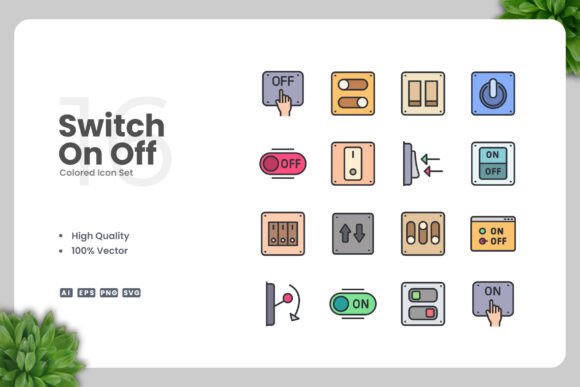
Icons are one of those design elements that often get overlooked until you need them. You are working on a new app interface or maybe a flyer for an upcoming event, and suddenly you realize that the visual language you are using lacks clarity. That is where having a reliable set of icons with clear states becomes essential. The concept of a switch on off colored icon is simple but powerful. It gives you two distinct visual cues inside one unified design. Instead of guessing whether something is active or inactive, you get an instant read. And when the icons are designed with a simple, clean look, they work across almost any project without clashing with your existing style.
If you have ever tried to pull together a quick social media graphic or a print poster, you know how frustrating it can be to find graphics that do not look like they belong to a different era. Switch on off colored icons solve this problem by offering a modern, minimal aesthetic that fits right into both digital and print environments. Whether you are a small business owner updating your website or a freelancer putting together an infographic for a client, these icons save time and reduce friction. You do not need to start from scratch. You just drop them in, adjust the color if needed, and move on with your work.
Where These Icons Fit Into Everyday Work
Think about the last time you designed a mobile app screen or a landing page. You probably needed some way to show a toggle, a setting, or a status change. A switch on off colored icon is perfect for those moments. It communicates exactly what the user needs to know without relying on text alone. For user interface designers, this is a small but significant win. People scan screens quickly. They look for visual anchors. A clean, colored icon that shows an on or off state helps them navigate your interface with less cognitive load.
But the use cases go far beyond interfaces. Consider a printed brochure for a tech product. You might want to highlight the difference between power modes, features, or settings. Instead of using bulky screenshots or long descriptions, you can use a switch on off icon to convey the idea instantly. The same applies to presentation slides, where every extra word competes for attention. A well-placed icon can replace an entire bullet point.
Social Media Graphics That Stand Out
Social media moves fast. You have maybe two seconds to catch someone's attention before they scroll past. A clean, colorful icon can be the difference between a post that stops the scroll and one that gets ignored. If you are a content creator or a social media manager, you already know that consistency matters. Using switch on off colored icons in your posts, stories, or highlights gives your profile a professional feel. You can use them to indicate a live event, a feature that is available, or a setting that your audience should know about. The color adds energy, while the simple shape keeps the message clear.
Even for personal accounts, these icons can add a layer of polish. If you are sharing a tip or a tutorial, a visual cue like a switch icon helps your audience follow along. You do not need to be a professional designer to make it work. With vector files, you can resize and recolor the icon to match your brand palette without losing any quality.
Print Projects That Benefit from Clean Iconography
Print design comes with its own set of challenges. Once something goes to the printer, there is no easy undo. That is why starting with high quality, vector based graphics matters. Switch on off colored icons work beautifully in flyers, posters, and banners because they hold up at any size. You can scale them down for a business card or blow them up for a trade show banner, and they will still look crisp.
For a small business owner creating a promotional flyer, these icons can highlight key features of a product or service. Imagine you are advertising a new subscription plan with a basic tier and a premium tier. A switch icon can visually separate the two options, making it easier for customers to understand what they are getting. The colored version can indicate the premium tier, while the off state represents the basic plan. This kind of visual shorthand is especially useful when space is limited.
Publishers and educators also find these icons helpful. In a textbook or an instructional booklet, a switch icon can illustrate a concept like turning on a device or enabling a feature. The simplicity of the design means it does not distract from the content. It just supports it.
Infographics and Data Visualization
Infographics are all about making information easy to digest. You are often trying to compare two states, like before and after, enabled and disabled, or active and inactive. Switch on off colored icons fit naturally into these narratives. Instead of relying on abstract symbols, you get a recognizable visual that most people already understand. The colored version draws the eye, while the off version recedes into the background. This helps guide the viewer's attention to the most important parts of your graphic.
Whether you are a marketer presenting data to a client or a teacher explaining a process to students, these icons add clarity without adding clutter. And because they are fully customizable, you can adjust the colors to match your specific theme or brand guidelines.
Why Vector Format Matters for Real Use
One of the biggest frustrations people have with downloaded graphics is the lack of flexibility. You get a PNG file, and that is it. If you need to change the color or resize it, you are stuck. That is not the case with vector icons. Switch on off colored icons come in formats like AI, EPS, SVG, and PNG, so you have options. The vector files allow you to open them in software like Adobe Illustrator or CorelDRAW and make changes in seconds.
For a freelancer working on multiple projects with different brand colors, this is a game changer. You can take the same icon set and adapt it for each client. For a hobbyist who is just learning design, it means you can experiment without worrying about ruining the original file. The included readme.txt file also provides basic instructions, which is helpful if you are not deeply familiar with vector software.
Drag and Drop Simplicity
Not everyone has time to learn complex design workflows. You might just need a quick icon for a blog post or a newsletter. The drag and drop nature of these files means you can pull them into your project and position them right away. The PNG files with transparency are ready to use immediately. If you need to edit, the vector files are right there. This flexibility is especially valuable for busy entrepreneurs and marketers who wear many hats.
Imagine you are putting together a last minute email campaign. You need a visual element that communicates the main call to action. A switch icon with a vibrant color can draw attention to a button or a link. You do not need to hire a designer or spend an hour fiddling with tools. You just insert the icon, adjust the size, and you are done.
Choosing the Right Icons for Your Audience
When you are selecting switch on off colored icons for a project, think about who will be seeing them. If your audience is primarily adults aged 20 to 50, a clean and modern design is usually the safest bet. These viewers are used to digital interfaces and expect a certain level of polish. They appreciate icons that are intuitive and not overly cartoonish. The simple design language of these icons communicates professionalism without being boring.
Another factor to consider is the context. Will these icons be used on a dark background or a light one? With vector files, you can adjust the contrast to ensure visibility. The colored icons pop best when there is enough contrast around them. If you are working on a poster with a busy background, you might want to use the simpler off state or place the icon inside a shape to give it room to breathe.
Consistency also matters. If you are using these icons across multiple pages or materials, keep the color scheme uniform. That does not mean every icon has to be the same color, but the overall palette should feel intentional. A set of icons that share the same stroke weight and visual style will make your project look cohesive.
Practical Considerations Before Downloading
Before you commit to any icon set, it is worth considering the file types you actually need. If you work mostly in web design, the SVG and PNG files might be your go to. If you do print work, you will probably want the AI or EPS files for better scalability. The switch on off colored icons come with all these options, so you are covered regardless of the medium.
Another practical point is customization. Not everyone wants to edit icons, but it is nice to have the option. The 100 percent vector quality means you can change the color, size, and even combine icons with other elements. You are not locked into one look. This adaptability is what makes the set useful for a wide range of users, from educators to app developers.
And if you ever get stuck, the readme file provides basic guidance. It is a small touch, but it shows that the designer considered the end user experience.
Real Outcomes from Using These Icons
What does it actually look like when you use switch on off colored icons in a project? Let me paint a picture. You are a blogger writing a post about productivity tools. You want to compare free vs paid versions of an app. Instead of writing a long paragraph, you place two icons side by side. The brightly colored switch indicates the paid features. The muted off switch represents the free tier. Readers instantly understand the difference. The post looks more polished, and your point comes across in half the time.
Or imagine you are a small business owner launching a new service. Your social media ad includes a simple visual of a switch being turned on, with your offer written next to it. The icon does the heavy lifting. It signals activation, readiness, and value. People are more likely to stop and read the caption because the image already told them something relevant.
For educators, these icons can be used in online course materials to highlight interactive elements or instructions. A switch icon next to a module title tells students that something can be toggled or activated. It creates a more engaging learning experience without requiring extra explanation.
Final Thoughts on Using Switch on off Colored Icons
The real value of a good icon set is not in how many files it includes or how fancy it looks in the preview. It is in how easily you can integrate it into your actual work. Switch on off colored icons are designed for that kind of practical use. They are simple enough to fit into any style, yet colorful enough to add visual interest. Whether you are building a mobile app, designing a flyer, or creating content for social media, having a clear, customizable icon set saves you time and helps you communicate better.
And because the files are vector based, you are not stuck with a one size fits all solution. You can adapt, edit, and reuse them across projects without starting from zero. That kind of flexibility is especially valuable when you work across different mediums, from digital screens to print materials.
So next time you are putting together a project and you need a clear way to show an on or off state, consider reaching for a switch icon. It might be the simplest part of your design, but it can make a big difference in how your audience understands and engages with your message.