Packaged Food Sketch: How Convenience Item Drawing Transforms Creative Workflows
The visual language of modern design draws heavily from the everyday objects that define our routines. Among these, the Packaged Food Sketch has emerged as a surprisingly versatile and powerful asset for creators across industries. This convenience item drawing captures the familiar shapes, textures, and branding of packaged goods, offering a visual shorthand that resonates deeply with modern audiences. Whether you are developing a marketing campaign, building a presentation, or crafting digital content, the packaged food sketch provides an immediately recognizable visual anchor that communicates convenience, accessibility, and everyday life.
In an era where visual communication must be both instant and evocative, the ability to use a simple, stylized representation of a packaged food item opens creative possibilities that go far beyond literal depiction. This is not merely a drawing of a box or a bottle; it is a cultural reference point, a narrative trigger, and a design element that can adapt to countless contexts. Understanding what this asset represents and how to leverage it effectively can meaningfully enhance the quality and impact of your work.
What Is a Packaged Food Sketch?
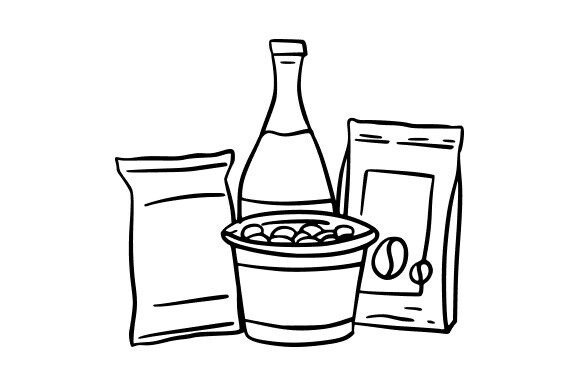
A Packaged Food Sketch is a hand-drawn or digitally rendered illustration that depicts a packaged food item such as a cereal box, a snack wrapper, a beverage carton, a canned good, a takeout container, or a frozen meal package. Unlike a photograph, which captures every detail and imperfection of a real product, a sketch distills the item into its essential visual characteristics shape, label, typography, and iconic brand cues. This simplification allows the sketch to function as a universal signifier of packaged convenience foods without being tied to a specific brand or product variant.
The convenience item drawing aspect is key. These illustrations are designed to be quick to recognize and easy to integrate into various design systems. They often feature clean lines, minimal shading, and a stylized aesthetic that feels both nostalgic and contemporary. Because the sketch is not a photograph, it invites the viewer to project their own familiarity with packaged foods onto the image, making it a highly engaging and inclusive visual tool. The asset is available in multiple formats SVG, EPS, JPG, and transparent PNG each optimized for a different use case, ensuring that whether you are working in vector software, print layout, or web design, the illustration retains its quality and adaptability.
The Broader Context: Why Packaged Food Sketch Matters Now
The rising popularity of the Packaged Food Sketch sits at the intersection of several concurrent trends in the creative industry, consumer behavior, and business communication. As attention spans contract and the volume of visual content explodes, designers and marketers are under constant pressure to communicate messages quickly and memorably. A sketch of a packaged food item carries immediate semantic weight. It signals concepts like convenience, nourishment, routine, comfort, and even indulgence without requiring a single explanatory caption.
From a market perspective, the food and beverage industry has seen a sustained shift toward visual storytelling on social media, in packaging design, and in advertising. Brands are increasingly favoring illustrations over photography to differentiate themselves in crowded retail environments. A packaged food sketch fits seamlessly into this trend because it offers a clean, approachable aesthetic that feels less aggressive than a high-gloss product photo. It also aligns with the growing consumer preference for authenticity and simplicity a hand-drawn or vector sketch can feel more human and less corporate than a polished image.
Moreover, the remote and hybrid work environment has changed how creative assets are sourced and used. Freelancers, small business owners, and solo entrepreneurs need versatile, ready-to-use design elements that work across multiple platforms without requiring extensive customization. The convenience item drawing fits this need perfectly. It is a plug-and-play visual that can be dropped into a slide deck, a social media graphic, a menu, or a promotional flyer with minimal effort, yet it looks intentional and professionally crafted.
Why People Are Paying Attention to Packaged Food Sketch
Attention is being directed toward the Packaged Food Sketch because it solves a real problem in modern content creation: the need for relatable, high-quality visuals that are not bound by brand licensing or trademark concerns. When you use a photograph of a specific packaged food product, you are implicitly referencing a particular brand which can be limiting if your project requires neutrality or if you want to avoid free advertising. A sketch, by contrast, captures the archetype of a packaged food item without being a direct replica of any single product. This freedom allows creators to illustrate concepts like "breakfast," "snacking," "meal prep," or "grocery shopping" without stepping into legal or brand-identity gray areas.
Another factor driving interest is the explosion of infographic and explainer content across websites, blogs, and social media. In these formats, visual metaphors are essential for making data and concepts stick. A packaged food sketch can serve as a visual anchor in an infographic about food waste, meal planning, nutrition, or supply chains. It helps ground abstract statistics in a tangible, everyday object that viewers instantly understand. The sketch becomes a mnemonic device, increasing retention and engagement.
Additionally, the rise of convenience item drawing in digital sticker packs and messaging apps has normalized the look of these illustrations. People are accustomed to seeing sketched food items in their daily digital interactions, which makes the style feel familiar and welcome in more formal design contexts. This cultural familiarity lowers the barrier for acceptance, meaning audiences react positively to these visuals even in professional presentations or printed materials.
Changing Needs, Preferences, and Workflows
The relevance of the Packaged Food Sketch is rooted in how creative work itself has evolved. Designers and content creators today are expected to produce more assets across more channels than ever before. The era of spending days on a single illustration is giving way to workflows that prioritize flexibility, speed, and scalability. A pre-made, high-quality convenience item drawing allows creators to allocate their time toward composition, messaging, and customization rather than drawing everyday objects from scratch.
Small business owners and solo entrepreneurs, in particular, are pressed for time and often lack access to a dedicated design team. For them, a Packaged Food Sketch that comes in ready-to-use formats SVG for web and scalable print, EPS for professional design software like Adobe Illustrator, JPG for quick inclusion in documents, and transparent PNG for layering is a practical tool that reduces friction in their production process. They can focus on building their brand story and connecting with customers instead of wrestling with complex illustration software.
Consumer preferences have also shifted toward visual authenticity. Audiences are increasingly skeptical of overly polished, stock-photo aesthetics. They respond better to imagery that feels handcrafted, approachable, and honest. The sketch style, with its visible linework and simplified forms, conveys a sense of human touch that photography often lacks. This makes the packaged food sketch particularly effective for brands and creators who want to cultivate a warm, accessible, or artisan identity even when their subject is mass-produced packaged food.
Practical Examples of Packaged Food Sketch in Action
Consider a nutritionist preparing a presentation on healthy snacking habits. Instead of using generic clip art or brand-specific product photos, they can incorporate a Packaged Food Sketch of a granola bar, a yogurt cup, or a fruit pouch to visually represent "packaged healthy snacks." The sketch supports the message without endorsing any specific brand, and its clean style aligns with the professional, educational tone of the presentation. The same sketch can be used in a corresponding infographic, a social media post, and a printable handout, creating a cohesive visual identity across all touchpoints.
For a food blogger creating a "stock your pantry" guide, a series of convenience item drawing assets can illustrate each category of pantry staples: cans of beans, boxes of pasta, jars of sauce, bags of rice, and packages of spices. These sketches add visual interest to the blog post and can be reused in Pinterest pins, Instagram carousels, and email newsletters. Because the assets are available in transparent PNG format, they can be easily layered over background photos or colored blocks to match the blog's aesthetic.
In the marketing department of a mid-sized food brand, a designer might use a Packaged Food Sketch as part of a "sneak peek" campaign for a new product line. The sketch builds anticipation without revealing the actual packaging. It can be animated for social media, printed on teaser mailers, or used as a placeholder in internal presentations. The SVG format ensures the image remains crisp even when scaled up for a billboard or poster.
Freelance graphic designers can offer these sketches as part of a branding package for a local grocery store, a meal kit service, or a convenience store. The illustrations can appear on shopping bags, shelf signs, loyalty cards, and website banners. The cohesive visual language created by the convenience item drawing helps unify the brand's identity across print and digital media, all while saving the designer hours of illustration time.
Connecting Packaged Food Sketch to Larger Developments
The growing use of the Packaged Food Sketch reflects a broader movement toward modular, reusable design systems. As businesses and creators seek to work more efficiently, they are assembling libraries of pre-made components that can be mixed, matched, and adapted. This approach reduces redundancy and accelerates production cycles. The packaged food sketch fits naturally into such a system, functioning as a visual building block that can be populated across an entire project or brand family.
From a technology perspective, the widespread availability of high-quality vector and raster formats including SVG, EPS, JPG, and transparent PNG demonstrates how the industry is standardizing around file types that maximize utility. SVG ensures that the sketch can be used in responsive web design, while EPS supports professional print workflows. JPG and PNG cover the gap for quick, platform-specific needs. This multi-format approach is a response to the reality that modern creatives operate across a fragmented ecosystem of software and platforms, and they need assets that travel seamlessly from one environment to another.
The cultural fascination with food illustrations also ties into the broader trend of "food as visual content." Social media platforms are flooded with food photography, but the illustrated food sketch offers a refreshing alternative that stands out in crowded feeds. It taps into a sense of nostalgia and craftsmanship that algorithm-driven content often lacks. By choosing a convenience item drawing over a photograph, creators signal a deliberate editorial choice one that values style and concept over mere documentation.
Moreover, the sustainability conversation in design is quietly influencing asset preferences. A sketch, because it is a simplified representation, uses less digital storage and bandwidth than a high-resolution photograph. For creators concerned about digital footprint or working in low-bandwidth environments, vector-based Packaged Food Sketch assets are a practical, lightweight choice. They also never go out of date: a sketch of a cereal box does not age the way a photograph of a specific product package would, because the sketch is timeless in its abstraction.
Making Your Work Stand Out with Packaged Food Sketch
The decision to integrate a Packaged Food Sketch into your creative toolkit is a decision to prioritize clarity, versatility, and audience connection. Whether you are designing a menu, building an educational course, crafting a marketing funnel, or assembling a corporate report, this convenience item drawing provides a visual anchor that needs no explanation. It speaks the universal language of everyday sustenance and convenience.
Because the asset comes in SVG, EPS, JPG, and transparent PNG formats, you have the flexibility to use it exactly as your workflow demands. Scale it without losing quality, edit it in professional design software, drop it into a document, or layer it over a background. The asset is designed to integrate smoothly into your existing process, not to add complexity.
For professionals who value efficiency and impact, the packaged food sketch is more than just an illustration it is a strategic visual asset. It allows you to produce work that feels custom and thoughtful, even when working under tight deadlines. And because the asset is ready to use immediately, you can shift your energy from creating basic shapes to refining your message and engaging your audience.
The creative landscape rewards those who work smart. Having a library of versatile, high-quality illustrations like the Packaged Food Sketch at your disposal is a practical way to elevate every project you touch. Ready to make your designs stand out Get it today and start building visuals that resonate.