The Strategic Value of Recession Colored Icons in Modern Visual Design
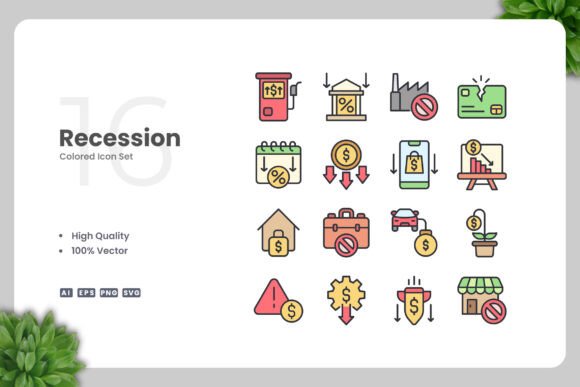
In recent years, the visual design landscape has shifted toward more restrained, grounded palettes. Among the most compelling developments is the rise of Recession Colored Icons, a term that describes iconography built around muted, subdued, and often earthy tones — colors that evoke stability, introspection, and quiet confidence. Unlike vibrant, trend-driven palettes that demand attention, recession-inspired colors communicate resilience and clarity, making them particularly effective in an era where digital clutter is at an all-time high. These icons are not merely aesthetic choices; they represent a strategic approach to visual communication that prioritizes longevity, accessibility, and cross-platform coherence.
Understanding the Recession Color Aesthetic
The concept of recession colors draws from periods of economic contraction, where design languages in advertising, branding, and product design historically shifted toward more conservative, trustworthy tones. Think of deep olive greens, slate grays, warm beiges, muted terracottas, and soft navy blues. These colors do not scream for attention — they earn it through subtlety. When applied to icons, this palette creates a sense of visual maturity that resonates with users who are weary of oversaturated interfaces and loud branding.
Recession Colored Icons thrive in contexts where the goal is to inform or guide rather than dazzle. For instance, a financial services app using a muted green icon for "savings" feels more trustworthy than a neon alternative. Similarly, a healthcare platform employing soft taupe symbols for patient resources conveys warmth without being distracting. The underlying principle is that the icon serves the content, not the other way around.
Why This Palette Works Across Media
The versatility of recession tones is one of their strongest attributes. Because these colors are inherently low-contrast and neutral-leaning, they adapt gracefully to various backgrounds — whether it is a white website, a dark-mode mobile app, or a printed flyer. Recession Colored Icons designed with vector precision maintain their integrity from a small button on a smartwatch to a large banner at a trade show. This consistency is critical for brands that need a unified visual language across touchpoints.
- On websites, they reduce visual noise and improve readability, especially when paired with ample whitespace.
- In mobile apps, they feel native and unobtrusive, enhancing the user experience without competing with content.
- In print materials like brochures and posters, they reproduce cleanly and resist the color shifting that can happen with brighter inks.
- In social media graphics, they lend a polished, editorial feel that stands out amid the usual high-saturation competition.
Practical Applications for Diverse Audiences
Because of their balanced nature, recession-colored icons serve a remarkably broad audience. A business owner can use them in a pitch deck to convey stability and forethought. An educator can incorporate them into learning materials to reduce cognitive load for students. A hobbyist designing a personal blog may find that these icons give the site a cohesive, professional finish without requiring advanced color theory knowledge. Even researchers presenting data in infographics benefit from icons that do not distract from the data itself.
One example that illustrates this breadth is a community health nonprofit that redesigned its outreach materials. By switching from bright primary colors to a recession-toned icon set, they reported a measurable increase in time spent on their informational pages. Users described the visuals as "calm" and "easy to digest" — precisely the response the organization was aiming for. This anecdote underscores a broader principle: recession colors lower the emotional temperature of a design, making it easier for audiences to focus on the message.
Real-World Use Cases Across Formats
Consider a scenario where a designer is creating a set of icons for a budgeting app. Using Recession Colored Icons, they might assign a muted ochre to "expenses," a soft sage to "savings goals," and a dusty blue to "investments." These colors carry positive associations — growth, stability, clarity — without the aggression of pure yellows or greens. When the app is later marketed via an Instagram carousel, the same icons can be extracted and used in the posts, maintaining brand recognition. If the same assets are needed for a printed booklet, the vector source files allow the designer to adjust the color saturation slightly for the print medium without losing the overall tone.
- Websites and landing pages — Icons serve as visual anchors for features, benefits, or steps in a process. Recession tones keep the focus on the copy.
- Mobile and tablet interfaces — Small screen real estate demands icons that read clearly at small sizes. Muted colors with strong silhouettes work well here.
- Infographics and data visualization — Icons can label categories or highlight trends without competing with the data itself.
- Print collateral — Flyers, posters, and banners benefit from colors that print predictably across different paper stocks and printers.
- Social media templates — Carousel posts, story highlights, and profile graphics gain a consistent, on-brand look.
- E-books and digital guides — Icons break up text and aid navigation, and recession colors prevent reader fatigue during long reading sessions.
Vector Architecture and Customization Workflow
Behind every effective icon set is a solid technical foundation. Recession Colored Icons are typically built as 100% vector assets, which means they are resolution-independent and infinitely scalable. This is not a minor detail — it is the difference between icons that look crisp on a 5K Retina display and those that pixelate when enlarged. Vectors also allow for rapid color changes, size adjustments, and even shape modifications without quality loss.
For designers using Adobe Illustrator, the workflow is straightforward. The included source file (.Ai) contains all icons as separate, fully editable objects. You can select any icon, open the color swatches, and replace the recession tone with any other hue — whether you need a dark variant for a night mode interface or a high-contrast version for accessibility compliance. The same applies to CorelDRAW, where the EPS Version 10 file offers broad compatibility. The SVG files provide a lightweight option for web developers who want to embed icons directly into HTML without extra dependencies, while the PNG transparency files are ready for immediate use in presentations or social media posts.
Key Features That Matter in Production
Not all icon sets are created equal, and the practical value of Recession Colored Icons is amplified by certain production features. High Quality Design means that every icon has been constructed with attention to proportion, stroke consistency, and visual balance. 100 Vector ensures that you never encounter resolution issues, whether you are outputting for a 32x32 pixel favicon or a 10-foot banner. 100 Customizable gives you the freedom to treat the icons as a starting point rather than a fixed asset — you can combine them, rotate them, or even use parts of one icon to build another. The Easy Drag and Drop nature of the included files means that even a non-designer can open the folder, select an icon, and place it directly into a document without troubleshooting layers or masks.
Another practical consideration is the inclusion of a Readme.txt file. This small addition often goes overlooked, but it serves as a quick reference for file formats, software requirements, and any special instructions. For teams where multiple people may be handling the assets — a graphic designer, a web developer, and a social media manager — having a single document that explains which file to use in which context saves time and reduces errors.
Media-Specific Observations and Best Practices
When using recession-toned icons in social media, consider the platform's dominant color scheme. LinkedIn, for example, has a predominantly blue and white interface, where a muted rust or olive icon can create a pleasing contrast without looking out of place. On Instagram, where bright visuals dominate, a set of recession-colored icons can actually help a post stand out precisely because they are different. The key is to let the icons breathe — avoid overcrowding them with text or other graphic elements.
For infographics, recession colors work particularly well as secondary visual elements. You might use a bold accent color for the headline and data points, while the icons sit in the background as subtle wayfinding aids. This layered approach prevents the infographic from feeling busy while still conveying multiple pieces of information at a glance.
In print, one consideration is that recession colors are often low in saturation, which means they consume less ink during printing — a practical advantage for large print runs. However, because these colors are subtle, it is important to test them on the intended paper stock. A warm gray that looks sophisticated on coated paper may appear muddy on uncoated stock. Having the Source File Ai and EPS Version 10 means you can adjust the brightness or saturation as needed for the specific print medium.
Navigating Color Consistency Across Devices
One challenge with any colored icon set is ensuring that the intended colors appear consistently across different screens and print outputs. Recession tones, because they are closer to neutral, tend to be more forgiving than bright colors when displayed on uncalibrated monitors. Nevertheless, it is wise to use the included SVG File format for web use, as SVGs support sRGB color space — the standard for most web browsers. For print, the EPS file can be converted to CMYK with relatively predictable results, especially if the designer starts with colors that are already desaturated.
From a file management perspective, having all formats in one package simplifies version control. You can store the Ai file as the master, export SVGs for the development team, and keep the PNGs in a shared folder for quick access by the marketing team. This workflow is especially valuable for small businesses or freelance designers who may not have a dedicated asset management system.
Design Trends and Longevity
Design trends come and go, but recession colors have a historical track record of endurance. They are not a fad; they are a return to fundamentals. In a digital environment where users are increasingly sensitive to visual overload, the restrained elegance of Recession Colored Icons offers a way to communicate with clarity and authority. Brands that adopt this palette are not chasing the latest trend — they are making a deliberate choice to prioritize usability and timelessness over fleeting novelty.
That said, recession colors are not a one-size-fits-all solution. In contexts where high energy is essential — such as children's apps, gaming interfaces, or event promotions — these muted tones may feel too subdued. The skill lies in knowing when to apply them. For most informational, professional, and service-oriented use cases, however, they are an excellent fit.
Final Practical Observations
To get the most out of a recession-colored icon set, start by identifying the primary contexts where the icons will appear. If they are for a mobile app, test them at the actual device resolution early in the design process. If they are for a print brochure, do a small test run before committing to the full print batch. The vector source files give you the flexibility to adapt, but the upfront planning will save you from last-minute adjustments.
Another tip is to pair recession icons with typography that shares similar qualities — a clean sans-serif with moderate letter spacing, for example. This combination reinforces the simple and clean design ethos that makes recession colors so effective. Avoid pairing them with overly decorative fonts or busy backgrounds, as the subtle power of the icons will be lost.
Ultimately, Recession Colored Icons are more than a visual style — they are a design philosophy that values substance over spectacle. By choosing icons that are grounded, versatile, and meticulously constructed, you give your audience a clear path to the information they need without unnecessary friction. Whether you are designing for a website, an app, a book, a social media campaign, or a printed poster, this approach yields results that feel both professional and human.