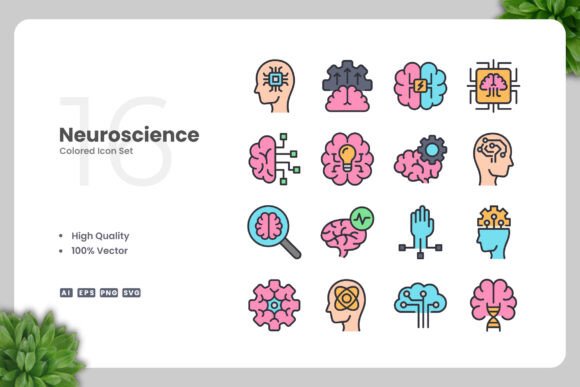
Neuroscience Colored Icons for Modern Design
Imagine a visual language that bridges the gap between complex neuroscience and intuitive design—this is exactly what Neuroscience Colored Icons bring to your creative toolkit. As graphic designers, we constantly search for assets that communicate ideas instantly while maintaining a polished, modern aesthetic. These icons are purpose-built to do just that, blending scientific themes with a simple, clean design that feels fresh and approachable. Whether you’re building a brand identity, crafting social media graphics, or laying out an editorial spread, a well-chosen icon set can elevate your entire project.
Why Neuroscience Colored Icons Matter in Visual Communication
In today’s design landscape, audiences crave clarity and emotional resonance. Neuroscience Colored Icons tap into that need by offering symbols that represent brain functions, neural connections, and cognitive concepts in an easy-to-understand visual form. They’re not just pretty pictures—they’re tools for visual hierarchy, helping you guide viewers through complex information. For example, in a UX interface, a simple brain icon with a soft color palette can instantly signal “intelligence” or “memory” without a single word. That’s the power of effective iconography: it reduces cognitive load and improves user engagement.
From a professional perspective, using a dedicated icon set like this ensures consistency across all touchpoints. You maintain brand integrity whether the icon appears on a website, a mobile app, or a printed flyer. The vector format (AI, EPS, SVG, PNG) means you can resize from a tiny favicon to a large poster without losing quality—something every seasoned designer values. And because these files are fully customizable in software like Adobe Illustrator and CorelDRAW, you can adjust colors, stroke weights, and details to match your exact brand palette. That’s real creative freedom.
Practical Applications Across Creative Projects
The beauty of Neuroscience Colored Icons lies in their versatility. Here are just a few ways they can enhance your work:
- Branding & Logo Design: Use a stylized neuron or brain wave as a memorable logo element. The clean lines and vibrant colors make it suitable for tech startups, health apps, educational platforms, or any modern brand that values innovation.
- Marketing & Advertising Campaigns: Incorporate icons into banners, posters, and social media ads. They draw the eye and can help explain abstract benefits—like “boost your brain performance”—in a split second.
- Website & UI/UX Design: Replace bulky stock photos with crisp icons. They load faster, scale beautifully on retina displays, and keep your interface uncluttered. Perfect for landing pages, dashboards, or blog graphics.
- Editorial & Print Design: Whether it’s a neuroscience textbook, a corporate brochure, or a magazine infographic, these icons add visual appeal without overwhelming the text.
- Packaging & Merchandise: Create stickers, labels, or t-shirt designs that feel both smart and stylish. The simple aesthetic translates well to screen printing or digital print.
- Presentations & Digital Products: Make your slide decks stand out. Icons break up bullet points and help tell a story, keeping your audience engaged from start to finish.
- Social Media & Infographics: A consistent icon set makes your feed look curated and professional. Use them as bullet points, dividers, or feature highlights in educational posts.
Tips for Selecting and Using Design Assets Effectively
Not all icon sets are created equal. When evaluating Neuroscience Colored Icons, look for high-quality vector files (like the ones included here) that offer multiple formats. Having both AI and EPS version 10 ensures compatibility with older and newer design software. The included PNG transparency is a lifesaver for quick mockups or when editing vectors isn’t possible. A readme.txt helps you stay organized—small details that signal a thoughtful product.
As you incorporate these icons into your workflow, consider color psychology. The set’s built-in palette likely includes blues, greens, and purples that evoke trust, growth, and creativity. Stick with those for a coherent look, or recolor them using your brand’s primary and secondary hues. Consistency is key: use the same stroke style and icon weight across all platforms to avoid visual noise. Scale with confidence—vectors mean zero pixelation. And always think about your audience: a health app might prefer softer, calming colors, while a tech startup could go bolder with neon accents.
Typography also plays a role. Pair these icons with clean sans-serif fonts like Inter, Lato, or Montserrat for a modern feel. The simplicity of the icons complements minimal layouts, but they can also add character to more expressive designs. When used in infographics, let the icons do the heavy lifting—place them next to data points or headings to create a strong visual hierarchy.
Integrating into Your Design Workflow
Once you download the files, drag and drop them into your project. If you’re using Adobe Illustrator, open the .ai file and use the direct selection tool to change colors or resize elements in seconds. For CorelDRAW, the .EPS version works seamlessly. The SVG files are perfect for web development—they scale and can be styled with CSS directly. And the transparent PNGs are ready for quick use in Canva or PowerPoint if you don’t have full vector software at hand. This flexibility means you spend less time fiddling with assets and more time creating.
As a designer, your workflow efficiency directly impacts the final quality. Having all files in one organized set saves hours. You can create a cohesive brand identity across 20 different materials without starting from scratch each time. That’s the kind of practical value that makes a design tool indispensable.
In the end, thoughtful design choices—like choosing the right icon set—are what separate good work from great work. Neuroscience Colored Icons offer a unique blend of scientific relevance and aesthetic simplicity. They help you communicate complex ideas visually, strengthen your brand’s identity, and save precious creative time. Whether you’re a freelancer, an agency designer, or a business owner building your own brand, these assets will serve you across websites, mobile apps, books, social media, infographics, flyers, print, banners, posters, and so much more. Use them wisely, and your audience will feel the difference—clean, smart, and engaging.